
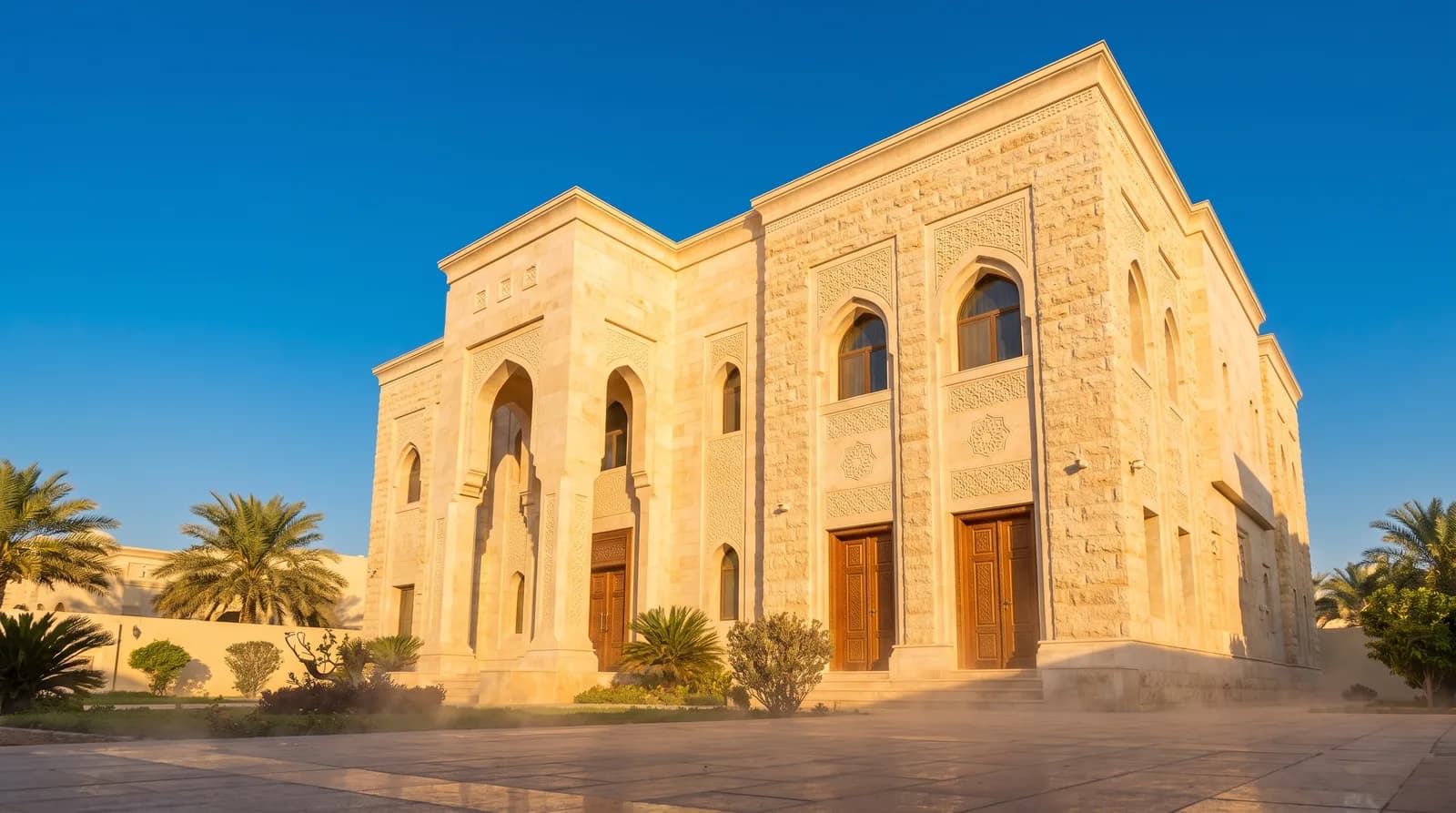
Omani Stone for Villa Facades in Qatar: Does It Hold Up in the Heat?
Ask any architect or villa owner in Doha about Omani stone and the same question comes up: it is beautiful, but does it survive a Qatari facade? It is a fair question — natural marble has a reputation as an interior material, and a facade in Qatar has to face 50°C summers, coastal humidity and salt-laden air. The honest answer, and the one Auckland has built its name on, is yes — provided three things are right: the grade of the stone, the finish, and the sealing. Here is how Omani stone performs on a facade, and what separates one that lasts from one that fails.
Is Omani stone suitable for facades in Qatar's heat?
Yes — but not every block of Omani stone, and not every finish. Omani stone covers a range of grades, from soft, heavily-veined decorative marble that belongs indoors, to dense, sound material that performs well outdoors. The dense grades have low water absorption (typically 0.15–0.5%) and high compressive strength, which is exactly what a facade needs to resist Qatar's daily heat cycle without cracking or spalling. The failures people remember almost always trace back to the wrong grade or finish being used outside — not to Omani stone as a category.
It comes down to grade, not just the name
'Omani stone' on a quotation tells you the origin, not the quality. Two facades can both be 'Omani' and perform completely differently because one used hand-selected, dense blocks and the other used cheaper, flawed material with hairline fissures that open up in the heat. This is the single most important decision in the whole project, and it is exactly where reputation matters: Auckland's name in Qatar is built on selecting sound, dense Omani blocks and rejecting material that looks fine in a showroom but fails on a wall. The grade you are shown is the grade that goes up.
The right finish for an exterior: honed or flamed, not polished
The high-gloss polish that makes Omani marble glow on a majlis floor is the wrong choice outdoors: it shows weathering, can become slippery, and the shine dulls under UV. For facades, the stone should be honed (a smooth matte surface), flamed (heat-textured for grip and a natural look) or bush-hammered. These finishes wear gracefully, hide the effects of dust and sun, and are the standard for exterior Omani stone across the Gulf.
Sealing for the Gulf's heat and humidity
Natural stone is porous, and on a Qatari facade that means it needs an appropriate impregnating sealer to resist moisture, salt and staining. A good penetrating sealer lets the stone breathe while keeping water and dirt out, protecting against the staining, salt efflorescence and biological growth that humidity causes. Sealing is reapplied periodically over the life of the facade — a small maintenance step that dramatically extends how long the stone looks new.
How Omani facade stone is installed to last
Material and finish are only part of the story; fixing decides longevity. On taller or fully-exposed elevations, Auckland uses mechanical (dry) fixing with marine-grade stainless steel, so each panel is anchored independently, thermal movement is absorbed, and a ventilated cavity drains moisture away from the wall. For lower walls and feature areas, adhesive fixing can be appropriate. Matching the fixing method to the exposure is what stops panels cracking or debonding years later.
Omani stone vs Syrian stone on a facade
Both are excellent Gulf facade materials, and they are often used together. Syrian stone is the dense all-rounder for large primary facades in warm cream and golden tones. Omani stone is chosen where the project wants its specific veining and character, or where the same material is being carried into carved columns, cornices and interiors for a seamless look. Many Doha villas use Syrian stone across the main elevation and Omani stone on the entrance, columns and feature walls.
Why clients choose Auckland for Omani facades
Omani stone is the material Auckland is known for in Qatar, and that reputation rests on three things competitors often skip: disciplined grade selection, the correct exterior finish and sealing specification, and in-house CNC fabrication that lets the same stone become columns, capitals and cornices to finish the facade. We supply, fabricate and install with our own crews across Qatar, so quality is controlled from the block to the wall.
Frequently asked questions
Is Omani stone good for a facade in Qatar's heat?
Yes, when a dense, sound grade is used with a honed or flamed finish and proper sealing. Those dense grades have low water absorption and high strength, which lets them resist Qatar's heat and humidity outdoors — failures usually come from the wrong grade or a polished finish being used outside.
What finish should Omani facade stone have?
Honed, flamed or bush-hammered. These matte, textured finishes wear well outdoors and resist the dulling and slipperiness that a high-gloss polish develops under sun and weather. Polishing is kept for interior floors and walls.
Does Omani stone need sealing on a facade?
Yes. An impregnating penetrating sealer protects the porous stone from moisture, salt and staining in Qatar's coastal climate, and is reapplied periodically to keep the facade looking new.
Thinking about an Omani stone facade, columns or entrance? Use our facade cost calculator for an instant estimate, or book a site consultation anywhere in Qatar.