
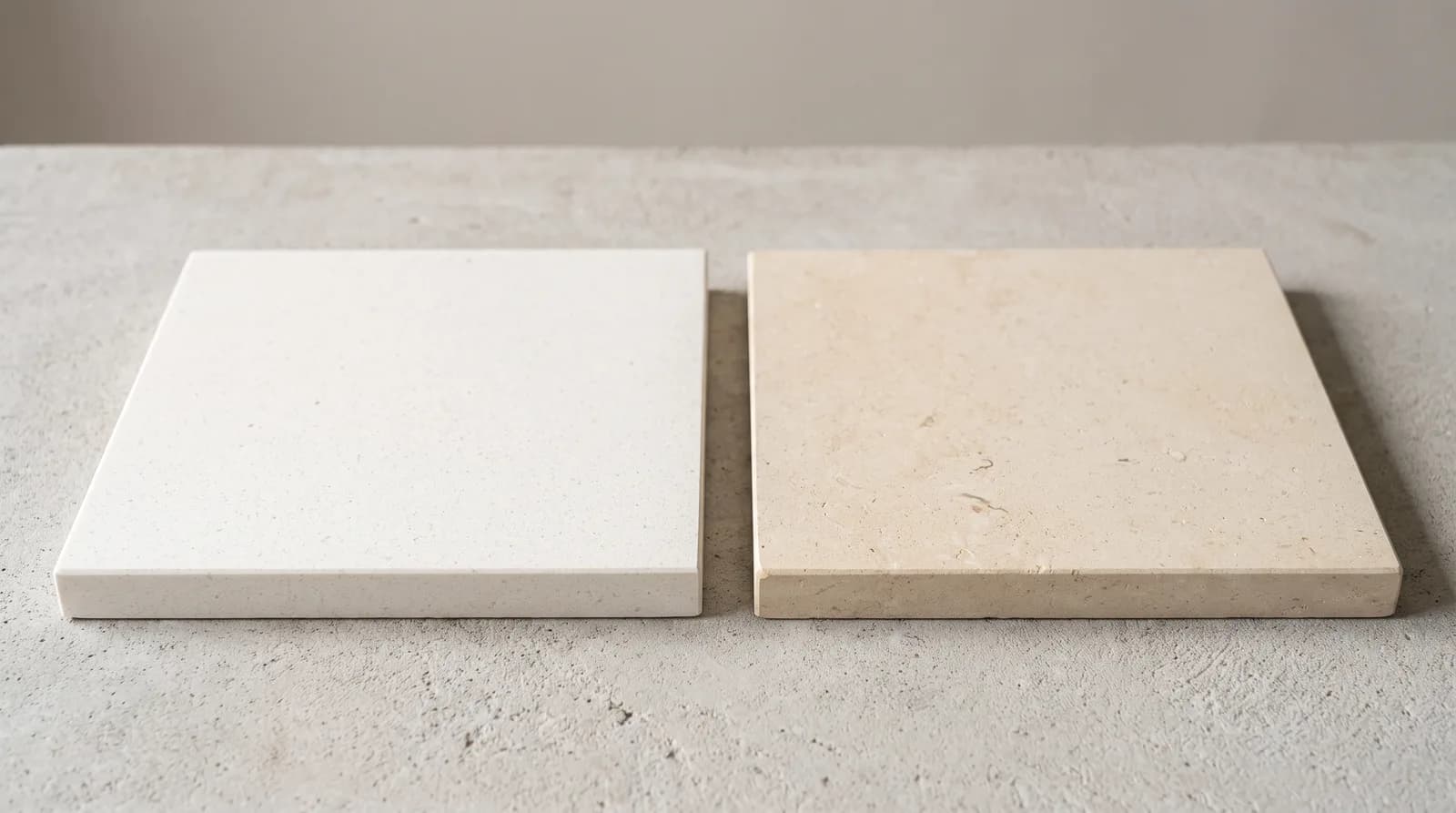
Syrian Stone vs Jordanian Stone: Which Is Better for Qatar Facades?
Syrian stone and Jordanian limestone are the two most common natural stones on Qatar's villa facades. At a glance they look almost identical — warm, sand-coloured limestone — but they are quarried differently, they perform differently, and choosing the right one affects how your facade ages in Doha's heat. This is a clear, side-by-side comparison to help you decide.
Where each stone comes from
Syrian stone is quarried mainly in the Homs and Palmyra regions of Syria, where the limestone is unusually dense. Jordanian limestone comes from quarries across Jordan and is famous for its consistent, fine appearance and easy workability. Both have a long history on Gulf facades, which is exactly why they are so often compared.
Density and durability
This is the most important difference. Syrian stone is prized for its high structural density, which resists the thermal expansion that causes facade cracks in the Gulf. Jordanian limestone is softer and more porous on average, with higher water absorption — that makes it easier to carve, but more prone to weathering, chipping and staining over time on exposed elevations.
Water absorption and heat resistance
For Qatar's mix of extreme heat and coastal humidity, water absorption matters as much as density. Syrian stone typically absorbs under 0.5% water, which helps it shrug off humidity and resist staining on south- and west-facing walls that take the worst of the sun. Jordanian stone's higher porosity means it benefits more from sealing and is better kept to sheltered or lower elevations.
Colour and finish
Both stones come in warm cream, beige and golden tones. Syrian stone tends to offer a cleaner, more uniform white-cream surface that suits modern villa designs and the popular 'white stone' facade look. Jordanian limestone often shows more visible veining and natural character, which many owners prefer for heritage and classical facades. Both can be honed, bush-hammered or split-faced.
Cost comparison
Jordanian stone is often slightly lower per square metre, and its consistent, fine appearance suits large, simple wall areas and boundary walls. Syrian stone commands a small premium for its density, low absorption and cleaner finish — usually worth it on a primary facade you want to last for decades with minimal maintenance.
Which should you choose?
For a main villa facade in Qatar that has to survive Gulf heat with minimal upkeep, Syrian stone is the safer long-term choice. For boundary walls, garden features and secondary elevations, Jordanian limestone is an excellent, understated choice. Many villas in Doha actually use both — Syrian stone on the primary, sun-exposed facade and Jordanian limestone where conditions are gentler.
Get expert help choosing
Auckland supplies and installs both Syrian and Jordanian stone, so our recommendation is based on your facade, not on what we happen to stock. We will look at orientation, exposure and design and advise the right stone for each elevation. Compare live prices with our facade cost calculator, or book a site consultation to get a tailored recommendation.
Frequently asked questions
Is Syrian stone better than Jordanian stone?
For exposed, sun-facing villa facades in Qatar, Syrian stone usually performs better thanks to its higher density and lower water absorption. Jordanian limestone is an excellent choice for boundary walls and sheltered areas.
Which stone costs more?
Syrian stone carries a small premium over Jordanian limestone per square metre, reflecting its higher density and finish.
Can I use both stones on one villa?
Yes, and many projects do — Syrian stone on the primary facade for durability, and Jordanian limestone on walls and secondary elevations, where its softer character suits.
Not sure which stone suits your project? Compare prices in our facade cost calculator, or book a site consultation with Auckland.