
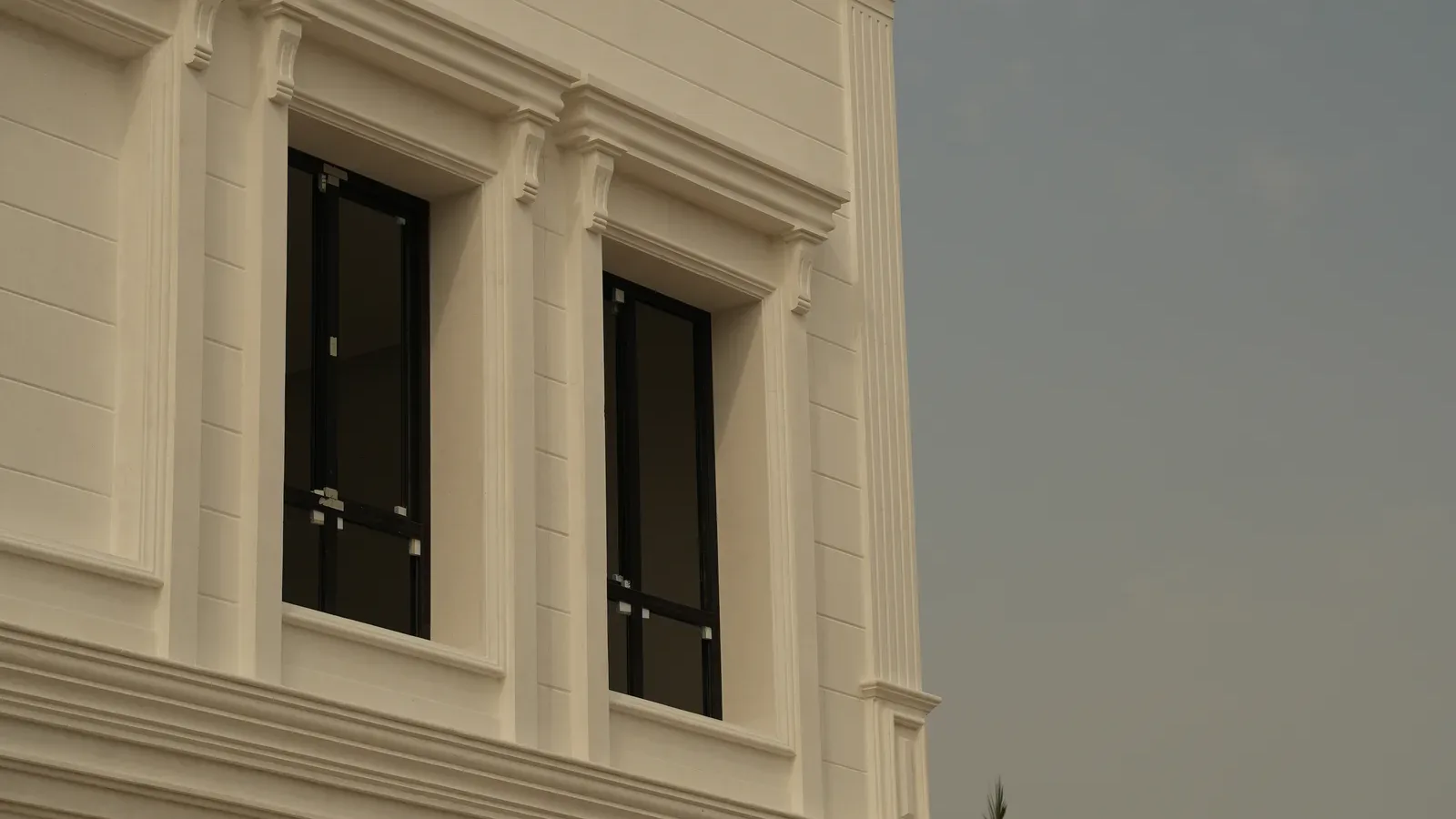
Ask for "Syrian stone" in Qatar and you'll get one of several different stones. They share a reputation — dense, heat-resistant, the go-to for villa facades — but the grade you choose changes the colour, the character and the price of your facade. This guide explains the main Syrian stone grades used in Qatar, what each is best for, the finishes, and how to pick the right one.
Why Syrian stone leads for facades in Qatar
Syrian stone is the most-requested facade material in Doha, and the reason is physical, not fashion. It is a dense sedimentary stone with very low water absorption (under 0.5%) and high compressive strength, so it resists the thermal movement that cracks paint and cheaper finishes in the Gulf heat. It also carves cleanly, which is why it suits everything from a plain modern elevation to a fully classical facade with columns and cornices. What varies between grades is mainly the colour, the grain and the exact density — and that is what you're choosing between.
The main Syrian stone grades
White Syrian Stone
The most requested grade in Qatar. White Syrian stone gives a clean, bright white-cream surface — the prestigious, modern look most villa owners want. It reads as fresh and high-end from the street and pairs with both classical detailing and contemporary massing. If you picture the typical bright white Qatari villa facade, this is usually the stone.
Sarmada Stone
Quarried near Sarmada in northern Syria, this grade is prized for its density and a warm cream tone. It is a very durable choice for exterior cladding in the Gulf climate, and the slightly warmer colour suits owners who want a softer, less stark look than bright white while keeping the same performance.
Aleppo (Halabi) Stone
Classic Aleppo limestone — fine-grained with a golden-beige hue. It has been used across Gulf architecture, heritage and modern, for generations. The fine grain takes carving detail well, making it a strong choice for cornices, mouldings and ornamented classical facades where a warm, traditional colour is wanted.
Finishes: honed vs bush-hammered
The grade sets the colour; the finish sets the texture and how the facade catches light.
- Honed — a smooth, even matte surface. The clean, modern default for most facades, and the easiest to keep looking uniform.
- Bush-hammered — a textured, lightly roughened face that adds depth and grip. Often used on accent bands, plinths and framing so the facade reads with contrast rather than as one flat plane.
Many facades mix the two — honed across the main field, bush-hammered on the details — and both are available across the grades. Split-faced and polished finishes are also possible for specific uses.
Which grade for which project
- Bright, modern villa facade: White Syrian stone, honed.
- Warm, softer facade with the same durability: Sarmada.
- Classical facade with heavy carving — columns, cornices, mouldings: Aleppo or White Syrian, depending on whether you want a warm or bright result.
- Accent and contrast detailing: a bush-hammered finish on any grade.
In practice, most Qatari villa facades are White Syrian stone, with Sarmada and Aleppo chosen when the owner wants a warmer tone or a particular carved character. Our recent Abu Hamour and Ain Khaled projects are both Syrian-stone facades that show how much range the material has, from monumental modern to heavily carved classical.
How Syrian stone is supplied and installed
Whichever grade you choose, the build matters as much as the stone. Auckland imports Syrian stone directly, cuts it to size on our own CNC line, finishes it honed or bush-hammered, and installs it with a mechanical (dry) stainless-steel fixing system engineered for Qatar's heat — so the facade moves with the temperature instead of cracking, and stays sound for decades. One accountable team carries the job from block to the last fixed panel.
Frequently asked questions
Which Syrian stone is best for a villa facade in Qatar?
For most Qatari villas, White Syrian stone is the best choice — it gives the bright, prestigious white-cream facade owners want, with the density to resist the heat. Sarmada is the pick for a warmer tone, and Aleppo suits heavily-carved classical facades where a golden-beige colour is wanted. All three perform well when mechanically fixed and properly installed.
What is the difference between White Syrian and Sarmada stone?
Both are dense Syrian facade stones. White Syrian gives a bright, clean white-cream surface for a modern, prestigious look, while Sarmada — quarried near Sarmada in Syria — has a warmer cream tone for a softer appearance. Performance is similar; the choice is mostly about the colour you want.
Does Syrian stone crack in Qatar's heat?
Properly installed, no. Syrian stone is dense with very low water absorption, so it resists the thermal movement that cracks paint and adhesive-fixed cladding. The key is mechanical (dry) fixing with stainless steel, which lets each panel move independently with the temperature instead of stressing the facade.
Choosing a Syrian stone facade? Auckland supplies, cuts, finishes and installs all Syrian stone grades across Doha and Qatar. See the full Syrian stone page, then book a site consultation.