
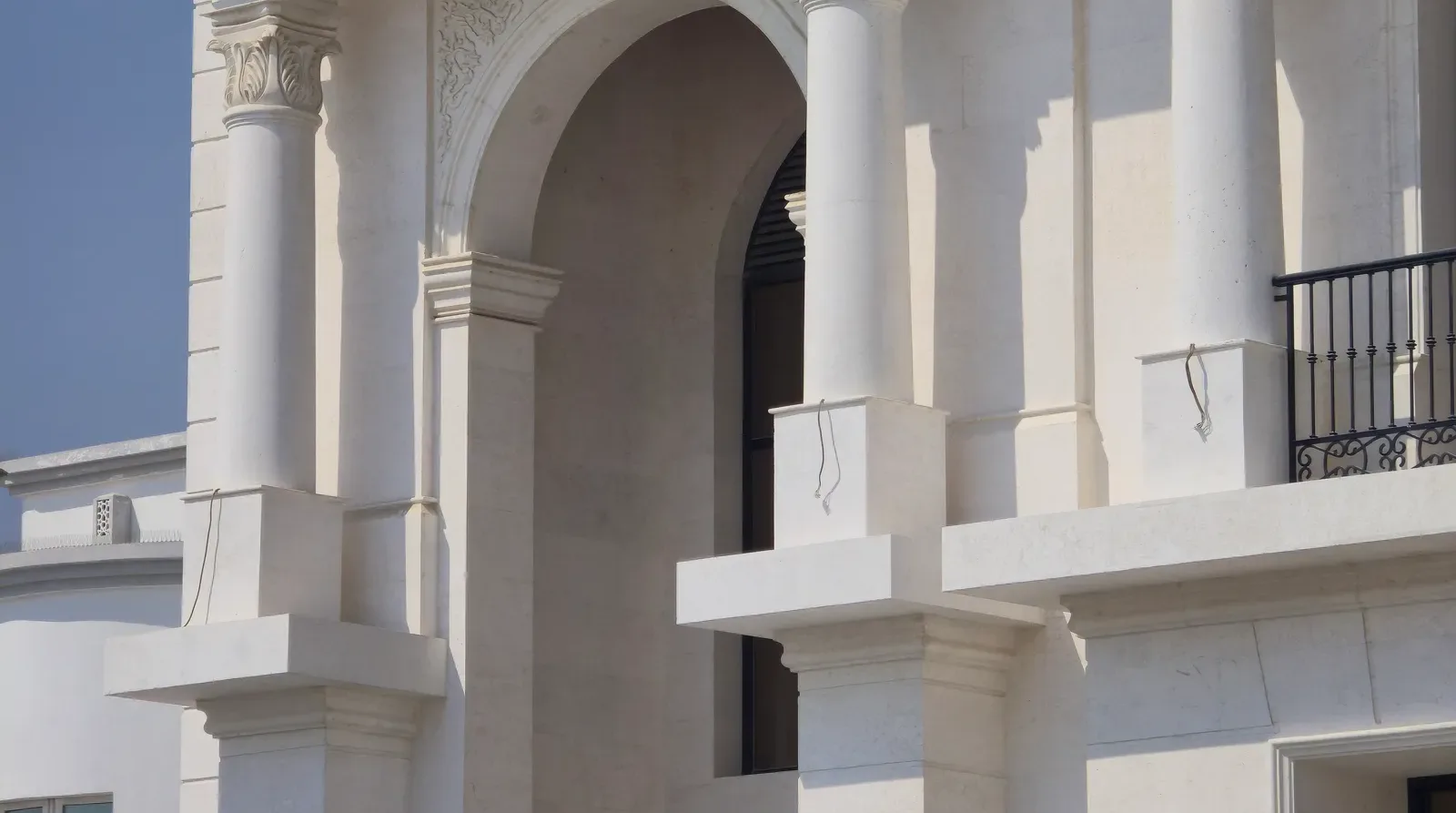
How to Maintain a Natural Stone Villa Facade in Qatar: Cleaning, Sealing & Longevity
A well-built natural stone facade is one of the few finishes that can still look new ten or twenty years after it goes up. That is the whole point of building in real stone rather than paint or render — it does not fade, peel or date. But "low-maintenance" is not "no-maintenance." In Qatar's climate — relentless sun, fine dust, and salt-laden air near the coast — a stone facade that is never looked after slowly dulls, streaks and stains, while one given a little attention stays crisp for decades. This is a practical guide to keeping a stone villa facade looking the way it did on handover.
What Qatar's climate does to a stone facade
Stone is durable, but it is not inert. Three things in the Gulf environment act on it over time:
- Dust and sand. The constant fine dust settles into the texture of honed and bush-hammered stone and, combined with occasional rain, can leave grey streaks and dull the surface — especially on horizontal ledges, cornices and sills where it collects.
- Salt and humidity. Near the coast — Al Wakrah, Lusail, Al Khor — salt in the air and humidity can draw mineral salts to the surface of the stone and its mortar, leaving a white haze (efflorescence). It is cosmetic, not structural, but it needs the right treatment.
- Heat and UV. Intense sun does not damage natural stone the way it fades paint, which is exactly why stone wins here — but it does drive the thermal movement that makes correct fixing and sealing important, and it accelerates staining if spills or runoff are left.
None of this is a problem for stone that was specified, fixed and sealed correctly and is cleaned occasionally. All of it becomes visible on stone that is neglected.
Routine cleaning — the 90% that keeps it looking new
Most facade maintenance is simply keeping dust and grime from building up. For the majority of villas, that means:
- A gentle wash once or twice a year. Plain water and a soft brush or low-pressure rinse removes settled dust before it streaks. For most honed facades this is enough to restore the fresh look.
- A pH-neutral stone cleaner for grime. Where washing alone doesn't lift built-up dirt or pollution film, use a cleaner made for natural stone — never a general household or acidic cleaner. Work top-down and rinse thoroughly.
- Extra attention to ledges and cornices. The horizontal surfaces — cornices, sills, string courses, balustrade tops — collect the most dust and cause the streaking below them, so they are worth cleaning first.
Done once or twice a year, this simple routine is what keeps a facade looking close to new — no specialist needed for the basics.
Sealing — the invisible protection
A penetrating (impregnating) sealer soaks into the stone and makes it far more resistant to staining and water absorption, without changing its look or leaving a film. On a Qatari facade it is worth doing because it makes dust and marks much easier to wash off, slows staining from any runoff, and helps against salt and efflorescence near the coast.
- When it's applied. Ideally the stone is sealed at installation — Auckland seals facades as part of handover — so protection is there from day one.
- How often to re-seal. As a rule of thumb, a facade benefits from re-sealing roughly every 3–5 years, sooner on exposed coastal elevations and later on sheltered ones. A simple water-drop test tells you: if water still beads on the surface, the sealer is working; if it soaks in and darkens the stone, it is time to re-seal.
- What sealing is not. A sealer is not a one-time forever coating and it does not fix a facade that was fixed or detailed badly. It is maintenance, not a substitute for correct construction.
Dealing with common problems
Efflorescence (white haze)
That powdery white bloom is mineral salt brought to the surface by moisture — common on newer facades and near the coast. It is cosmetic. Light efflorescence often brushes off dry; persistent efflorescence needs a proper efflorescence remover and, more importantly, finding and fixing the moisture source. Do not just paint over it.
Stains and runoff marks
Rust streaks from metal fixings or railings, organic marks, or runoff staining should be treated with the correct stone poultice or cleaner for that stain type — matched to the stone, not a generic acid. The sooner a stain is treated, the more fully it lifts.
Dull or weathered stone
If a facade has been neglected for years and looks flat and grey, cleaning alone may not fully restore it. Professional restoration — a deep clean, stain treatment, re-honing or re-polishing where needed, and re-sealing — can bring tired stone back close to its original appearance. This is exactly the polishing-and-restoration work Auckland does.
What NOT to do to a stone facade
Most facade damage is self-inflicted with the wrong cleaning method. Avoid these:
- Acidic cleaners (including many general bathroom and "descaling" products) — acid etches and dulls marble and limestone permanently. Only ever use pH-neutral, stone-safe products.
- High-pressure jet washing — a strong pressure washer can erode softer stone, blast out pointing and drive water behind the panels. Use low pressure and a soft brush.
- Harsh scrubbing pads or wire brushes — they scratch the finish. Soft brushes only.
- Ignoring the mortar and joints — cracked or failed pointing lets water behind the stone; it should be checked and repaired, not left.
- DIY sealing with the wrong product — a film-forming or exterior-wrong sealer can trap moisture and cause more harm than none. Use a breathable, penetrating sealer suited to the stone.
Why correct installation makes maintenance easy
Here is the honest foundation of low-maintenance stone: most facades that become a maintenance headache were not built right in the first place. Adhesive-fixed stone that traps moisture, the wrong stone for the exposure, or no sealing at handover — these create the problems that no amount of cleaning fully solves. A facade that was mechanically (dry) fixed with a ventilated cavity, built from a dense stone suited to the climate, and sealed at handover is inherently easy to look after. This is why the way a facade is built determines how much maintenance it will ever need — and why Auckland builds them to last with a minimum of upkeep.
When to call a professional
Routine washing is a homeowner job. Call a stone specialist for: efflorescence that keeps returning, stubborn stains, rust runoff, cracked pointing or loose panels, re-sealing a large facade, or restoring a facade that has been neglected for years. Auckland offers facade cleaning, re-sealing and full stone restoration in Qatar — including for facades we didn't originally build — and can assess a facade and tell you honestly what it needs.
Frequently asked questions
How often should a stone facade be cleaned in Qatar?
For most villas, a gentle wash with water and a soft brush once or twice a year is enough to remove settled dust before it streaks the stone. Coastal facades and horizontal surfaces like cornices and sills collect more dust and may need slightly more frequent attention. Only use pH-neutral, stone-safe cleaners — never acidic household products.
How often should a natural stone facade be re-sealed?
As a rule of thumb, roughly every 3–5 years — sooner on exposed coastal elevations, later on sheltered ones. A simple test: splash water on the stone; if it beads up, the sealer is still working, but if it soaks in and darkens the stone, it is time to re-seal. Ideally the facade is sealed at installation so it is protected from day one.
How do you remove the white haze (efflorescence) from stone?
Efflorescence is mineral salt drawn to the surface by moisture and is cosmetic, not structural. Light efflorescence can often be brushed off dry; persistent efflorescence needs a dedicated efflorescence remover and, importantly, finding and fixing the underlying moisture source. Never use strong acid, which damages the stone.
Can you clean a stone facade with a pressure washer?
Only at low pressure. A high-pressure jet washer can erode softer stone, blast out the pointing between panels and force water behind the cladding. A low-pressure rinse with a soft brush and a stone-safe cleaner is the safe method.
Does Auckland maintain and restore facades it didn't build?
Yes. Auckland provides facade cleaning, re-sealing, stain and efflorescence treatment, and full stone polishing and restoration in Qatar — including facades built by others. We can assess the facade and recommend honestly what it needs, from a simple clean and re-seal to full restoration.
Want your stone facade looking its best again — or built right so it stays that way? Request a facade assessment from Auckland's restoration team.